The Zorba experience
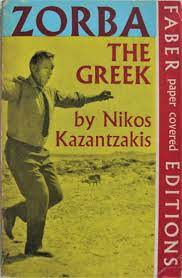
Zorba the Greek is a novel written by Nikos Kazantzakis. It is a story about the journey of two individuals with contrasting personalities who become very close during the course of their lives. One is a young bookworm, and the other is an older, adventurous man named Zorba; these two are the central characters of the story. As the character of Zorba unfolds, I felt that this man thinks, behaves, and talks very much like Osho. Interestingly, Osho has spoken a lot about Zorba. Osho says that Zorba is the foundation needed to reach Buddhahood. He explains that without this foundation, one cannot build the palace called Buddha, and he envisioned the "new man" to be just like Zorba.
In many places while reading this novel, I felt as if I were reading one of Osho's books. Normally, I can reach a meditative state during or after going through Osho's works, and the exact same thing happened while reading this novel. This book has a powerful spiritual hold on the reader. Not only that, but in my opinion, Osho's lectures were hugely inspired by the character of Zorba. I do not know how a more orthodox Osho follower would react to this view, but the book was written and published well before Osho's time, and Osho himself spoke very highly of it.
The author, who was nominated for the Nobel Prize on nine different occasions, has many interesting quotes to his name. One such quote perfectly reflects the spirit of this epic novel: "I hope for nothing. I fear nothing. I am free."
Coming to the book itself, I would say Zorba is a dreamlike character. The author deserves immense praise for creating him. I think many of us would want to emulate Zorba's lifestyle—the author has molded a free-wheeling, amazing, awe-inspiring, daring, and lovable character. What touched me most was Zorba's deep humanity. He lived beyond the prejudices of race, religion, gender, and nationality. Developing a character like this during the war-ravaged period of the mid-20th century was a massive achievement. At that time (1946), nationalistic sentiments were at an all-time high, and there was often a thin line between nationalism and jingoism. This book is yet another proof that great writers think far ahead of their times.
I would rate this alongside great Russian classics like Tolstoy's Anna Karenina and Dostoevsky's Crime and Punishment. It is an absolute must-read for lovers of classic literature.


Comments